Inspired by Richard Feynman and by the exploration of the universe, the UMAS Foundation believes in curiosity as the engine of knowledge, and in a future in which humanity will live on more than one planet, carrying its culture with it.
Richard P. Feynman, Nobel laureate in physics in 1965, showed that understanding nature takes nothing away from its beauty: it multiplies it. To him knowledge was an adventure to be shared, doubt a form of freedom, science a way of looking at the world with wonder. This is where the philosophy of the UMAS Foundation comes from. To us philanthropy does not only mean supporting: it means investing in people's ability to ask questions, wherever they are. Every music school, every education project, every investment in space exploration springs from the same gesture.
I learned very early the difference between knowing the name of something and knowing something.
- 01
Curiosity
Asking questions before giving answers: the criterion by which we choose and guide every project.
- 02
Shared knowledge
Music, art and science are universal languages: we bring them to schools, theatres and communities, because knowledge grows when it is shared.
- 03
Exploration
We support those who push the limits of the possible further: research, innovation and the ventures opening the way to space.
- 04
Multiplanetary life
We believe in a future in which humanity will carry its culture beyond Earth. Preparing it begins with today's education.
In 1977 the Voyager probes left Earth carrying a gold-plated copper record: 115 images, the sounds of our planet, greetings in 55 languages and 90 minutes of music from every era and culture, chosen by a committee chaired by Carl Sagan. It is the noblest portrait humanity has ever entrusted to the cosmos, and the model that inspires the Foundation: uniting music, art and science in a single message, made to last and to be understood by anyone.
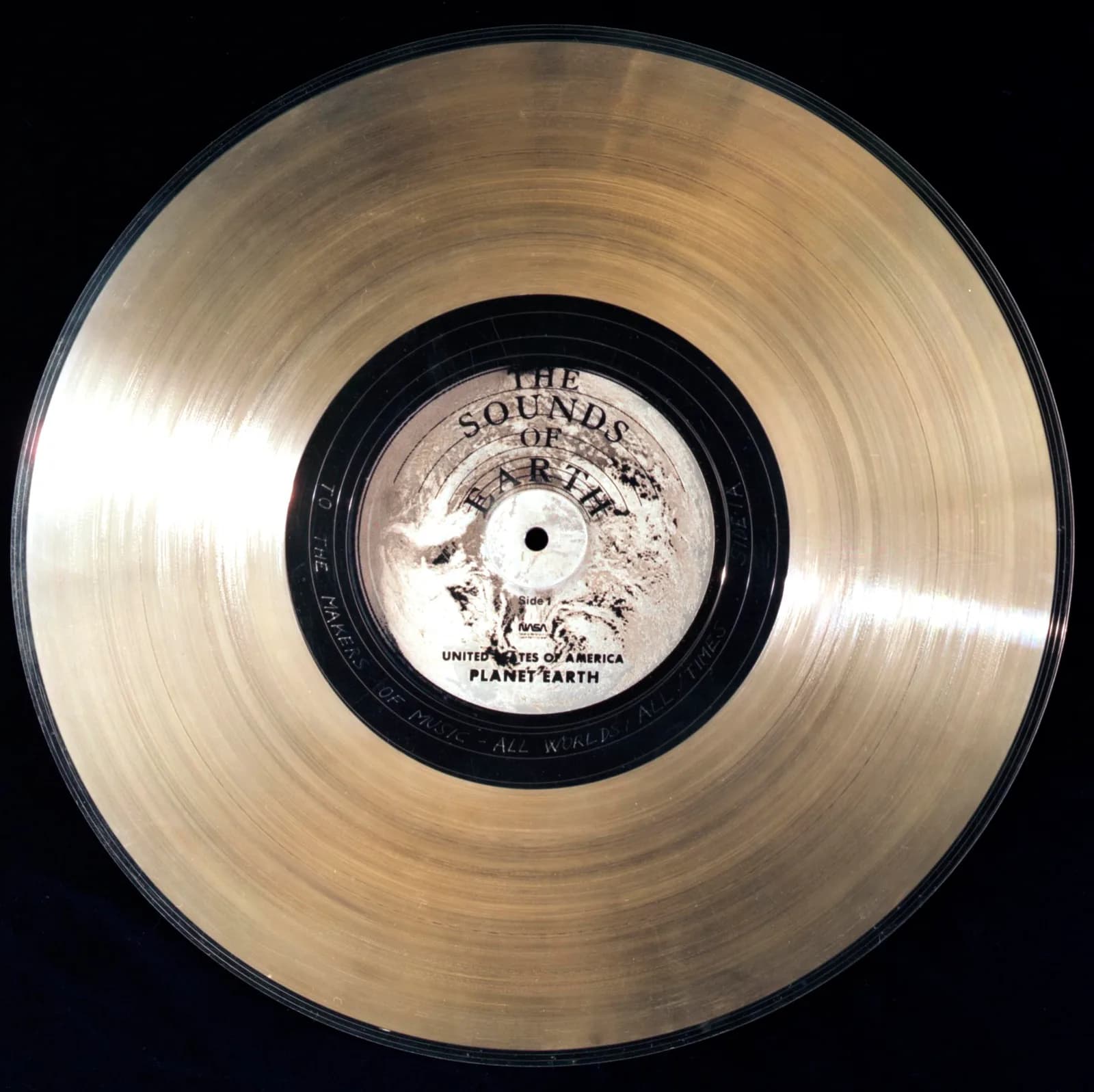
16⅔ revolutions per minute
Wind, rain and thunder, birdsong and whale song, footsteps, a heartbeat, laughter: the story of Earth told through its sounds, from the birth of the planet to civilisation.
Engraved on the record
- year of launch
- 1977year of launch
- images encoded in the grooves
- 0images encoded in the grooves
- languages of greeting
- 0languages of greeting
- minutes of music
- 0′minutes of music
Voyager 1 · real-time estimate
NASA / JPL
—
km from Earth
—
light travel time
1 ld+
Beyond one light-day
Voyager 1 is the most distant object ever built by humankind. On 18 November 2026, for the first time, its signal will take a whole day to reach us.
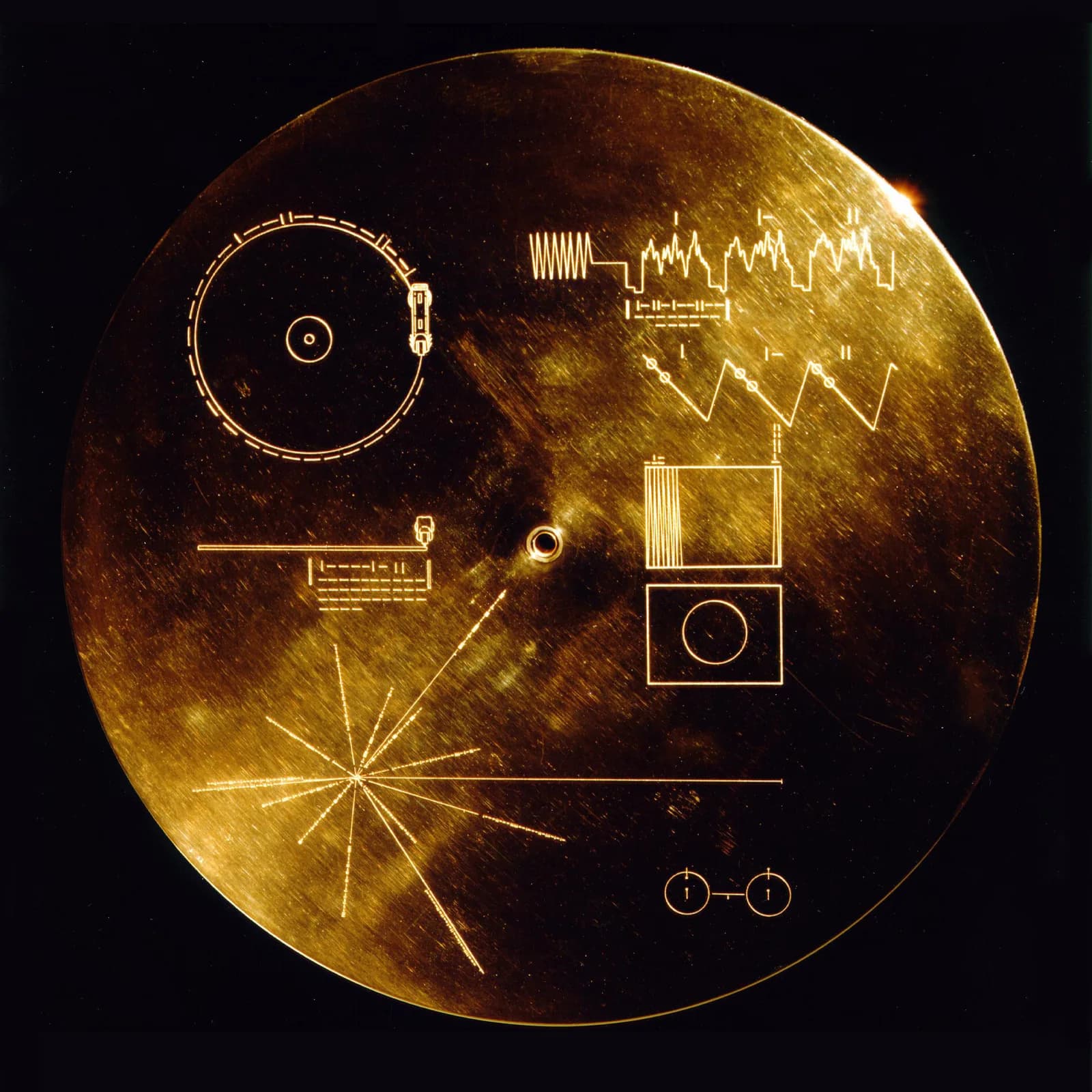
Tap the numbers to read the cover
Photographs of the record and cover, and audio recordings: NASA/JPL-Caltech · Film: Curiosity, melodysheep · The distance of Voyager 1 is a real-time estimate based on NASA data.
Exploring the universe is the natural continuation of human curiosity. Just as the Golden Record carried our music among the stars, the Foundation supports projects and ventures, from Virgin Galactic and SpaceX to its own software house Secret Orbit, preparing the day when Earth's culture will inhabit other worlds.
- 1
Earth1 AU
Where everything begins: schools, orchestras, workshops. Educating today the minds that will explore tomorrow.
- 2
Moon384,400 km
The first outpost: the science and technology that make it possible to live and work beyond the atmosphere.
- 3
Mars1.52 AU
Humanity's next horizon, where we will bring not only instruments but also art and music.
- 4
Beyond> 120 AU
Interstellar space, where Voyager 1 travels with its golden record: the most distant message ever sent.
Let's work together
Write to us to build projects uniting culture, science and exploration.